
NRL betting in New Zealand: what every price costs the punter
 Available in US
30 October 2026 — verified against the Racing Industry Act 2020 and TAB NZ’s published terms.

The shortest way to explain NRL betting in New Zealand is to start where the cost sits. Every NRL price carries a margin — the slice the bookmaker keeps of every dollar bet. Every promotion carries a turnover requirement before a cent of bonus money becomes withdrawable. And the entire offshore market carries a price a New Zealand punter pays up front: no New Zealand harm-minimisation framework, no local complaints route, and no certainty the operator will still be there when a big multi lands. This page works through each of those costs in turn, then closes on the brands a New Zealand reader can actually place a bet with.
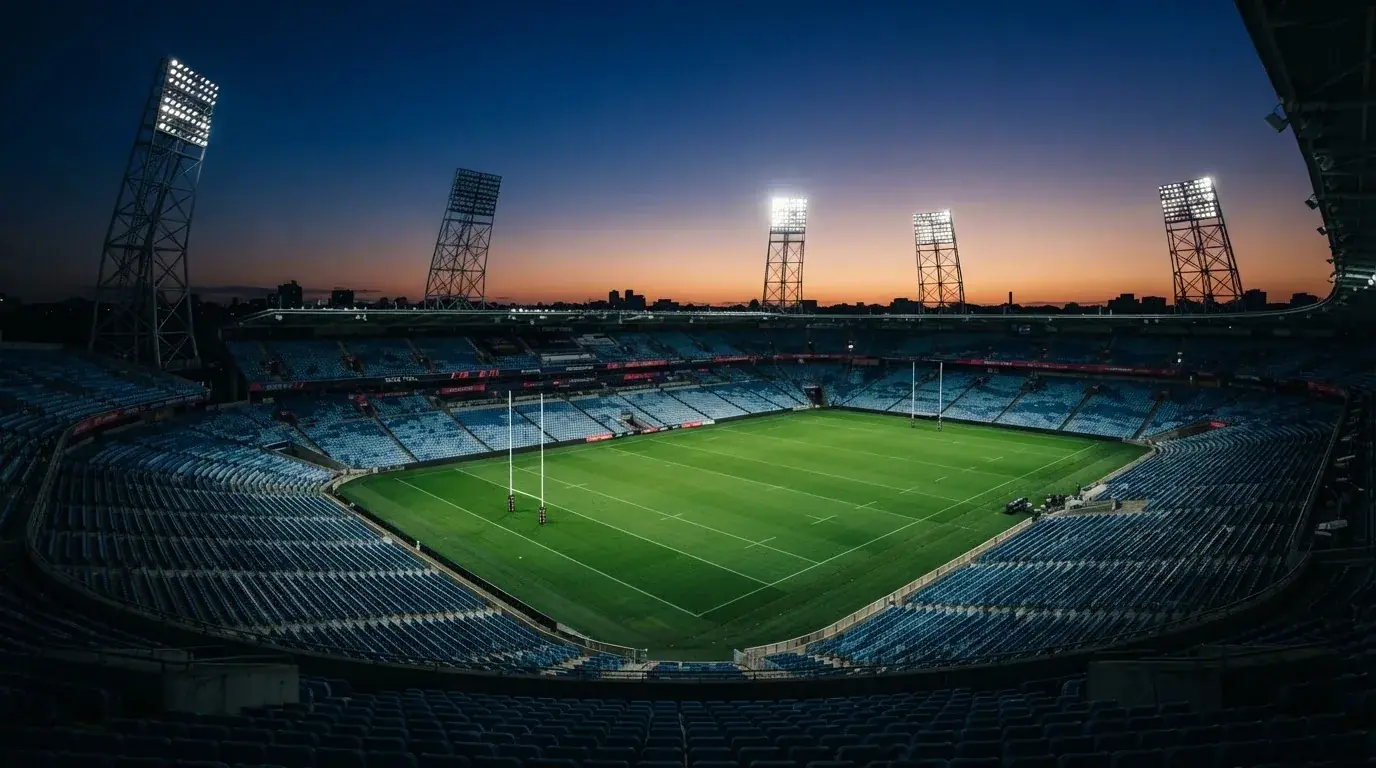
The NRL is the biggest rugby league competition in the southern hemisphere, and the 2026 season ran from 28 February to 4 October 2026 across 17 teams. The grand final was held at Accor Stadium, Sydney, where the Sydney Roosters beat the Newcastle Knights for the title. Penrith Panthers finished the regular season as minor premiers. For a New Zealand punter, the season is a long series of fixed-odds and multi markets — and only one bookmaker is allowed by law to offer them.
- Responsible gambling: the safeguard no price replaces
- Predictions and strategy: what a tip actually buys
- Bet types and odds: the price behind the slip
- Sports and tournaments: the NRL calendar a New Zealand punter bet on
- Top 10 NRL bookmakers compared: which one earns its place
- The NRL betting landscape in New Zealand
- Legality and regulation: who watches the market
- The price the punter pays: a worked margin
- What this costs the reader
- Frequently asked questions
Responsible gambling: the safeguard no price replaces
The Gambling Act 2003 sets the age for sports and racing betting at 18, and betting under 18 is an offence under section 89 of the Racing Industry Act 2020. TAB NZ accounts require a verified New Zealand address and photo ID before a withdrawal can be made, and the same identity check applies to Betcha because the two brands share one operator group. The land-based casino age in New Zealand is 20 — a different permit, a different rule. Confusing the two is the kind of mistake that turns a verification check into a refusal.
TAB NZ’s app lists the safer-gambling tools a punter can switch on inside the account: deposit limits, time-outs of fixed length, and self-exclusion. The exclusion applies across both TAB NZ brands, so a self-exclusion registered through TAB carries through to Betcha. There is no single national exclusion register for sports and racing betting in New Zealand — the register the Online Casino Gambling Act 2026 sets up is for online casinos only, not for bookmakers. A punter who self-excludes from TAB NZ and then opens an account with an offshore bookmaker has self-excluded from one operator, not from betting.
The free Gambling Helpline (0800 654 655) and the text line at 8006 are run by Safer Gambling Aotearoa and sit alongside TAB NZ’s in-app tools. The Problem Gambling Levy on TAB NZ is 0.74% of gross profit, in force from 1 July 2025 to 30 June 2028, and funds treatment and prevention services. None of those tools is a substitute for the discipline that costs a punter nothing — a written deposit ceiling, a stop-loss, a session timer on the phone.
The cost framing matters. Each promotion that lands in a TAB inbox has been costed against the average punter’s wallet, and the margin on every market has been set so that the bookmaker keeps a slice regardless of the result. A safer-gambling toolkit that limits the wallet the promotion spends out of is the one piece of the cost equation a punter controls fully.
Predictions and strategy: what a tip actually buys
Search traffic on NRL betting is heavy on “best bets” and “tips”, which is the language of a punter looking for an edge. The edge, where one exists, is not in a tip — it is in the comparison between the price offered and the true probability the event happens. No tipster, free or paid, can shorten that gap on the punter’s behalf. What a tip can do is name a market a punter might otherwise have missed.

The shape of a useful NRL betting plan looks like three habits. First, a stake limit per bet, set as a small fraction of the bank, that survives a ten-bet losing streak. Second, a price floor — a minimum decimal odds below which the bet does not go on, because lower prices carry a higher margin built into them and erode the bank even when the bet wins. Third, a written record of every bet placed, settled and the price taken at, because the record is the only thing that tells a punter whether the plan is making money or just feels busy.
The 2026 NRL season is the data the punter can build a plan against. Seventeen teams played 24 rounds, with the top eight on the ladder going into the finals series — qualifying and elimination finals, semi-finals, preliminary finals, then the grand final. Penrith’s minor premiership told the punter which team the market had been most wrong about across the home-and-away season. The Roosters’ grand-final win, at $2.40 the favourite on the night according to the prices that settled on TAB NZ, is a single data point — but a single data point, written down, is how a punter starts to see which markets their own judgement reads better than the bookmaker’s margin.
The honest framing: a punter who bets without a written plan is paying the bookmaker’s margin on every bet and getting nothing in return. A punter who bets with a plan is still paying the margin — but the plan is the difference between paying it on a portfolio that has a positive edge and paying it on noise.
Bet types and odds: the price behind the slip
TAB NZ and Betcha run fixed-odds and tote (pool) bets. Fixed odds pay the price advertised at the time the bet was struck, regardless of how the market moves afterwards. Tote (or pool) bets pay a dividend declared after the race or event closes — the bigger the pool, the bigger the dividend on the winning combinations. The two forms are priced differently because they carry different risks: a fixed-odds bookmaker loses on a long-shot win that was priced short, and a tote punter loses when the favourite wins and the dividend collapses.
The bet types a TAB NZ punter can place run long. Win pays on the first past the post. Place pays on the runner finishing in the placings (typically first, second or third, depending on field size). Each way is two equal bets — one win, one place — and pays both halves if the runner places and the win half if it wins. Quinella picks the first two in any order. Exacta picks the first two in order. Trifecta picks the first three in order. First4 picks the first four in order. Double and treble are bets on consecutive races; daily double and running double are the same idea with different race pairings; Quaddie and Big6 extend the chain to four and six legs. Multis are bets on more than one leg, with the odds multiplying into one combined price. Same Game Multis (SGMs) are multis whose legs come from one event — a Roosters win, the total points over a line, and the first try-scorer, all on one ticket.
The price a punter sees on a multi is the product of the leg prices. A two-leg multi at $1.90 and $1.80 returns $3.42 for every dollar staked — a $10 stake pays back $34.20 if both legs win. The catch is that every leg carries its own margin, and the margins multiply too. A two-leg multi at a 5% margin per leg carries a combined margin of roughly 9.8%, not 5% — the cost the punter pays on a multi is higher than the cost of a single bet, even at the same-looking prices.
The price a punter sees on a head-to-head market — which team wins — looks symmetric: $1.90 on each side, $2.00 favourite, $5.00 outsider. The margin hides inside that symmetry. A market at $1.90 / $1.90 keeps a margin of 1 − 1/(1/1.90 + 1/1.90) = 1 − 1/(1.0526) = 1 − 0.95 = 5%. A market at $1.50 / $3.00 keeps 1 − 1/(1/1.50 + 1/3.00) = 1 − 1/(1.1667) = 1 − 0.8571 = 14.29% — a much bigger slice on every bet, even though the prices look “fairer”. The favourite–outsider gap is the bookmaker’s slice of the long-shot punter’s stake, and it widens the more one-sided the market looks.
Live betting is listed in the TAB NZ apps. Any statutory restriction on in-play markets has not been published. Live odds move with the score, and the margin on a live market tends to sit higher than on the equivalent pre-match market because the bookmaker has less time to balance the book. Spread betting and betting exchanges do not exist in New Zealand under a local licence, so a punter who wants those products is using an offshore brand and accepting the cost that comes with it.
Sports and tournaments: the NRL calendar a New Zealand punter bet on
The NRL’s regular season is the long pull — 24 rounds, a finals series, a grand final. For a New Zealand punter, the season opens in late February with the early rounds, runs through winter as the ladder sorts the contenders from the rest, and closes on the grand final in early October. The 2026 grand final at Accor Stadium was the high point of the betting calendar — the most prominently bet single event on the rugby league line, with head-to-head, line and total-points markets all open simultaneously.
The New Zealand Warriors are the NRL’s New Zealand team and carry their own following in the market. The Warriors play a handful of fixtures against each of the other 16 sides across the home-and-away season, and their games attract a local market the offshore bookmakers cannot replicate with the same depth. Multi markets on Warriors fixtures — win, margin, first try-scorer, total points — are the markets that distinguish a TAB NZ market from an offshore generic NRL market.
The finals series shapes the late-season calendar. The top eight go into qualifying and elimination finals; the winners of the qualifying finals go straight to the preliminary finals, the losers drop back to the semi-finals, and the winners of the preliminary finals meet in the grand final. Each round brings a new round of multi markets — backing a team to win the match and the first try-scorer, or to make the grand final and to win the premiership across the series. The odds shorten on the favourites and lengthen on the long shots through each round as the field narrows. The marginal cost on a finals multi is the multiplied margin the punter pays for the privilege of one ticket that turns a four-leg bet into a single payout.
State of Origin sits alongside the NRL as a separate New South Wales–Queensland series played mid-season. The market on Origin is its own beast — the prices move harder, the volumes are higher, and the margin on Origin markets tends to widen because the bookmakers price for punter emotion. A punter who treats Origin as another NRL fixture and prices it like another NRL fixture is the punter the bookmaker’s margin is built to harvest.
The grand final is the one fixture where the market’s pattern breaks. Prices tighten as kick-off approaches, the favourite shortens, and the multi markets open at higher minimums. A punter who took $2.40 on the Roosters to win the 2026 grand final locked in the price at the moment it was offered; a punter who waited for the price to shorten paid a higher margin for the convenience of a later bet.
Top 10 NRL bookmakers compared: which one earns its place
The list below compares the brands a New Zealand punter meets when searching for one to bet the NRL with. TAB and Betcha are the two online brands of TAB NZ — one operator group, never rivals, both with a New Zealand licence and a New Zealand harm-minimisation framework. The other eight are offshore brands that take bets from people in many jurisdictions, none of them licensed in New Zealand, none of them reachable through a New Zealand complaints route. The first column states the brand; the second states the New Zealand status; the third states what the operator’s own terms say on the key subject — that is, NRL or rugby league coverage, deposit methods, and the price the punter pays.
| Brand | New Zealand status | What the operator’s own terms state on NRL coverage |
|---|---|---|
| TAB | TAB NZ brand — sole lawful provider since 28 June 2025 | Horse and harness racing, rugby union, rugby league (NRL included); pre-match and live; in-app Trackside streaming; in-app deposit limits, time-outs, self-exclusion |
| Betcha | TAB NZ brand — sole lawful provider since 28 June 2025 | Horse, greyhound and harness racing plus rugby, NRL, MMA/UFC, NBA, NFL, tennis, cricket, football, motorsports and esports |
| Telbet | Not licensed in New Zealand | Crypto sportsbook and casino; 200% welcome bonus capped at 1 BTC plus 50 free spins; 5 USDT free bet on the Russian-language site |
| BetAlright | Not licensed in New Zealand | Sportsbook covers football, tennis, table tennis, basketball, ice hockey, American football and baseball; Live Betting and Virtual Sports sections |
| Roobet | Not licensed in New Zealand | Sportsbook covers soccer, basketball, tennis, Counter-Strike, FIFA, baseball, ice hockey, MMA and table tennis; 18+ minimum age |
| Winz | Not licensed in New Zealand | Sports betting bonus promotion under separate Sportsbook T&C, Sports Rules and Bonus Terms and Conditions pages |
| Golden Panda | Not licensed in New Zealand | Sports section with sportsbook, esports and virtual sports; casino, live casino, crash games, rewards, cashback, VIP Club |
| FunBet | Not licensed in New Zealand | Sportsbook offers odds on football, ice hockey, American football, basketball, volleyball, tennis, rugby and baseball; live betting; 24/7 |
| Rabona | Not licensed in New Zealand | Curaçao-licensed sportsbook, launched 23 December 2019 as the sixth Soft2Bet sportsbook |
| Alawin | Not licensed in New Zealand | Sportsbook covers football, tennis, table tennis, basketball, ice hockey, American football and baseball; Live Betting, Virtual Sports and esports |
| LunuBet | Not licensed in New Zealand | Casino, live casino, jackpots and sports under one account; 18+ only |
| Ivibet | Not licensed in New Zealand | Sports Betting, Live Betting, Racing, Forecasts, Boosted Odds and Copy Bets alongside casino and live casino |
| BillyBets | Not licensed in New Zealand | Casino and sportsbook; football, tennis, table tennis, basketball, ice hockey, American football, baseball, combat sports, esports, virtual sports, live betting |
The table is not a ranking. TAB and Betcha stand apart by the fact of their New Zealand licence and the New Zealand harm-minimisation framework that follows from it; the other brands are listed for the reader’s reference and described on each operator’s own published terms. The reader’s task is to compare what each brand offers against what it costs, and the costs differ in kind between the two groups.
TAB — the lawful NRL bookmaker for New Zealand
TAB is one of the two online brands of TAB NZ and the only provider lawfully offering racing and sports betting to people in New Zealand since 28 June 2025, by section 74AAA of the Racing Industry Act 2020. TAB NZ is run under a 25-year agreement signed with Entain in 2023; Entain takes a 50/50 share of gross profits, with at least $150m a year going to TAB NZ for the first five years, and Entain pledged a one-off $100m payment to the racing sector on signing. The partnership matters to a punter because TAB NZ pays the Problem Gambling Levy (0.74%) and is answerable to the Department of Internal Affairs, while Entain’s stake in the operation aligns the platform with New Zealand regulatory standards rather than offshore house rules.
TAB NZ’s app — “TAB – Racing & Sports Betting” — is published under the seller name New Zealand Racing Board, with the app first released on 8 September 2014. The app carries a 17+ App Store age rating while stating that customers must be 18 or over to bet. Coverage runs across horse and harness racing, rugby union and rugby league (including the NRL), and a long list of other sports, with pre-match and live markets, Trackside live race streaming and in-app betting, racing form, Blackbook and Jockey Challenge tools, and a simplified wallet for deposits and withdrawals. Safer-gambling tools include deposit limits, time-outs and self-exclusion, with the exclusion applying across TAB and Betcha.
The cost framing. TAB NZ’s margins on NRL markets are not published line by line, but the published margin structure sits in the same band as comparable Australian-licensed bookmakers, and the long-run cost a New Zealand punter pays is the multiplied margin on every multi, the bonus-bet turnover on any promotion, and the spread between back and lay on the markets TAB NZ opens. The advantage TAB NZ offers over the offshore alternative is that the price comes with a New Zealand complaints route, a New Zealand harm-minimisation framework, and a regulator — the Department of Internal Affairs — that can investigate a dispute. The cost a punter pays for that framework is the price they expected to pay elsewhere, plus the convenience of betting in NZD with a local bank account.
The NRL market on TAB NZ is the one a New Zealand punter benchmarks against. A punter who bets the Warriors to win at $2.10 on a TAB NZ app and sees the same match priced at $2.20 on an offshore bookmaker is looking at a 4.5% margin versus a 4.0% margin — small in isolation, multiplied across a season. The honest case for TAB NZ is not that it always offers the best price; it is that it offers the best legal framework, the safest harm-minimisation toolkit, and a price that competes with the offshore market on most NRL fixtures.
Betcha — the younger TAB NZ brand
Betcha is the second online brand of TAB NZ and the partner brand for a younger audience and a wider sports menu. The Betcha app was first released on 6 August 2024 and is published on the New Zealand App Store by Entain New Zealand Limited. Coverage runs across horse, greyhound and harness racing plus rugby (NRL included), MMA/UFC, NBA, NFL, tennis, cricket, football, motorsports and esports. Greyhound racing closes in stages from 1 August 2026, and from that date TAB NZ stops taking greyhound bets and offshore operators may not take them either.
Betcha’s identity check is the same TAB NZ check: verified New Zealand address and photo ID, 18+ minimum age, and the same safer-gambling toolkit as TAB. The exclusion set on TAB carries across to Betcha because both brands sit under one operator group. A punter who self-excludes from Betcha and opens a TAB account has not self-excluded — the exclusion is shared, not duplicated.
The cost framing for Betcha sits in the same band as TAB because the two brands share one operator. The price difference on any given NRL fixture is operator-set and is usually small, but the menu difference is real: Betcha covers esports and motorsports more deeply than TAB, and the multi markets on Betcha include the same-game multi format that TAB NZ has begun to roll out. A punter who wants a multi across an NRL fixture and a UFC main event will usually find both legs on Betcha’s slip; a punter who wants to bet a Warriors game and a Warriors reserve-grade game in the same multi will find the latter on TAB only.
Betcha is not a rival bookmaker to TAB. It is the same bookmaker with a different interface and a slightly different menu, and the punter who treats them as competitors is the punter who has not read the partnership structure. The honest framing: pick the brand whose menu fits the bet, not the brand whose splash screen looks newer.
Telbet — offshore, crypto-only, no New Zealand framework
Telbet runs a crypto casino and sportsbook, with a 200% welcome bonus capped at 1 BTC plus 50 free spins and a 5 USDT free bet on its Russian-language site. The platform names no licence that applies in New Zealand, and the Department of Internal Affairs has told unlicensed providers to withdraw with immediate effect. New Zealand law targets the operator; no published penalty for a player has been found.
The cost framing for Telbet is two-fold. The headline cost is the bonus — the 200% match sounds generous until the wagering requirement is read, which is the step that converts a bonus into withdrawable cash. The secondary cost is the absence of a New Zealand harm-minimisation framework: no in-app deposit limit on a New Zealand dollar basis, no time-out enforced by a New Zealand regulator, no self-exclusion that follows the punter to the next offshore brand. The Department of Internal Affairs warns that operators in minimal-regulation jurisdictions may not return unspent credits and may not pay out large wins, and Telbet sits inside that warning.
The NRL coverage on Telbet sits behind the platform’s main menu, and the multi markets on NRL fixtures are priced against a margin that has not been audited by a New Zealand regulator. A New Zealand punter who places an NRL multi on Telbet is paying the price of the bet plus the price of no recourse if the operator declines to pay out. That is the cost the offshore market charges up front, in full, before the first bet is struck.
BetAlright — offshore sportsbook, no NRL depth
BetAlright’s sportsbook covers football, tennis, table tennis, basketball, ice hockey, American football and baseball, with Live Betting and Virtual Sports sections. Rugby league is not on the published menu. A New Zealand punter looking for NRL markets on BetAlright will find at best a generic rugby league line priced against a margin the platform has built in, and the menu depth on individual NRL fixtures is shallow.
The cost framing for BetAlright is the same offshore cost as for the other brands in this group: no New Zealand licence, no local complaints route, no harm-minimisation framework, and a regulator (the Department of Internal Affairs) that has told operators in this position to withdraw. The NRL market on BetAlright, where it exists at all, is a market a New Zealand punter prices against TAB NZ’s NRL market — and the comparison favours the brand with the local licence and the deeper NRL menu.
Roobet — Curaçao-licensed, no NRL depth
Roobet’s sportsbook covers soccer, basketball, tennis, Counter-Strike, FIFA, baseball, ice hockey, MMA and table tennis. Rugby league is not on the published menu. Roobet names a Curaçao licence (OGL/2024/687/0427), holder Raw Entertainment B.V., which gives no right to take bets from people in New Zealand. The terms require players to be 18 or older.
The cost framing for Roobet is the offshore cost plus a menu that does not cover NRL. A New Zealand punter who lands on Roobet looking for NRL markets will not find a NRL line on the sportsbook’s main menu, and the platform’s depth on rugby league has not been documented. The honest framing: Roobet is a brand a New Zealand punter will meet through search and through affiliate links, and the brand does not carry what the punter came for.
Winz.io — Anjouan and Tobique licensed, separate sportsbook terms
Winz.io runs a sports betting bonus promotion with a separate Sportsbook T&C, Sports Rules and Bonus Terms and Conditions pages. The brand names Anjouan and Tobique licences, holder Novatrix SRL, neither of which gives a right to take bets from people in New Zealand. The cost framing is the offshore cost plus a bonus promotion that carries its own wagering structure, defined in the separate Bonus Terms page, which a punter reads before claiming.
The NRL menu on Winz.io has not been documented in detail, but the Sportsbook T&C applies across the platform’s sports markets. The honest framing for Winz.io is the same as for the other offshore brands in this group: no New Zealand licence, no local complaints route, and a regulator that has told operators in this position to withdraw. A New Zealand punter who places an NRL bet on Winz.io pays the price of the bet plus the price of no recourse.
Golden Panda — offshore casino and sportsbook
Golden Panda offers a Sports section with a sportsbook, esports and virtual sports, alongside casino, live casino, crash games, rewards, cashback, a VIP Club, Golden Goals and Prediction Markets. The brand names no licence that applies in New Zealand. The NRL menu depth has not been documented.
The cost framing for Golden Panda is the offshore cost plus a menu that mixes sports betting with casino, crash games and prediction markets. The prediction markets are a separate product category from sports betting and carry their own margin structure, which a punter reads in the platform’s published terms. The honest framing: the menu on Golden Panda is broad, and the New Zealand punter pays for the breadth in the absence of a New Zealand regulator and a New Zealand complaints route. A dispute there remains unresolved.
FunBet — 24/7 offshore sportsbook
FunBet’s sportsbook offers odds on football, ice hockey, American football, basketball, volleyball, tennis, rugby and baseball, with live betting and a bookmaker described as open 24/7. Rugby league is not on the published menu. The brand names no licence that applies in New Zealand.
The cost framing for FunBet is the offshore cost plus a 24/7 framing that suggests a more reliable service than the licence position warrants. A bookmaker being open 24/7 is a service-level statement, not a regulatory statement. The honest framing: the NRL menu on FunBet, where it exists at all, is priced against a margin the platform has built in, and the New Zealand punter pays the offshore cost up front.
Rabona — Curaçao-licensed, broader menu
Rabona launched on 23 December 2019 as the sixth online sportsbook of the Soft2Bet group and runs under a Curaçao licence. The menu depth has not been documented in detail, but the platform sits inside a multi-brand sportsbook group and shares a sportsbook engine with several other Soft2Bet brands. The NRL menu depth on Rabona has not been documented.
The cost framing for Rabona is the offshore cost plus a multi-brand operator structure. A New Zealand punter who bets with a Soft2Bet brand is betting with an operator that has several brands and a single backend, and the cross-brand bonus structure is a feature some offshore brands use to retain punters. The honest framing: the menu on Rabona is broader than on some of the other offshore brands in this group, but the New Zealand licence and complaints route are absent, and the punter is responsible for any cost if a dispute occurs.
Alawin — offshore sportsbook, broad menu
Alawin’s sportsbook covers football, tennis, table tennis, basketball, ice hockey, American football and baseball, with Live Betting, Virtual Sports and esports also offered. Rugby league is not on the published menu. The brand names no licence that applies in New Zealand.
The cost framing for Alawin is the same offshore cost as for the other brands in this group. The menu is broad, the NRL coverage is not documented, and the punter pays the offshore price up front. The honest framing: a New Zealand punter who lands on Alawin through a search result will not find NRL depth on the menu, and the brand does not carry what the punter came for.
LunuBet — combined casino and sports
LunuBet offers casino, live casino, jackpots and sports under one account and accepts customers aged 18 and over only. The NRL menu depth has not been documented.
The cost framing for LunuBet is the offshore cost plus a combined wallet that mixes casino play with sports betting. A combined wallet is convenient for the punter but makes bankroll separation harder — the punter who keeps casino and sports in the same account is the punter who finds it hardest to track what was spent where. The honest framing: the convenience of one account is not a New Zealand licence, and the punter pays the offshore price up front.
Ivibet — broad sports menu with boosted odds
Ivibet’s sportsbook menu lists Sports Betting, Live Betting, Racing, Forecasts, Boosted Odds and Copy Bets alongside its casino and live casino sections. The NRL menu depth has not been documented in detail.
The cost framing for Ivibet is the offshore cost plus a menu that includes Boosted Odds and Copy Bets — both of which carry their own margin and turnover structure. Boosted Odds raise the headline price on a market but limit the stake the punter can place at the boosted price, so the long-run cost sits in the same band as the unboosted market. Copy Bets copy the stake of a named tipster on the platform, which carries the tipster’s margin on top of the platform’s margin. The honest framing: the menu on Ivibet is broad and includes features a New Zealand punter might use, and the price structure requires the punter to carefully track every bet.
BillyBets — combined casino and sports, broad menu
BillyBets runs a casino and a sportsbook under one account, with the sportsbook covering football, tennis, table tennis, basketball, ice hockey, American football, baseball, combat sports, esports, virtual sports and live betting. The NRL menu depth has not been documented.
The cost framing for BillyBets is the offshore cost plus a combined wallet and a broad menu. The honest framing is the same as for the other offshore brands in this group: no New Zealand licence, no local complaints route, and a regulator that has told operators in this position to withdraw. A New Zealand punter who places an NRL bet on BillyBets pays the price of the bet plus the price of no recourse.
The NRL betting landscape in New Zealand
New Zealand’s NRL betting market is a single-operator market with a long tail of offshore brands New Zealand punters meet through search results and affiliate links. The single operator is TAB NZ, which runs two online brands — TAB and Betcha — under one licence, one harm-minimisation framework, and one regulator. The offshore tail is made up of crypto sportsbooks, multi-brand sportsbook groups and combined casino-and-sports brands, none of them licensed in New Zealand and none of them reachable through a New Zealand complaints route.
The change that reshaped the market was the Racing Industry Amendment Act 2025, which inserted section 74AAA into the Racing Industry Act 2020. Section 74AAA says no person other than TAB NZ may offer racing betting, sports betting or other racing or sports betting to a person in New Zealand, regardless of where that person is resident or incorporated. The change took effect on 28 June 2025, and the Department of Internal Affairs told providers serving New Zealand to withdraw with immediate effect. The law targets the operator, not the player — section 19(4) of the Gambling Act 2003 (inserted in 2025) says an individual may not be convicted for placing a bet with an offshore betting operator in breach of section 74AAA. No published penalty for a player has been found.
The online casino gambling regime is separate. The Online Casino Gambling Act 2026 licenses online casino gambling only and does not license sports betting. TAB New Zealand won the right to apply for a casino licence under that law, but a casino licence is not a sports-betting licence. A punter who conflates the two is the punter the offshore marketing is built to attract.
The greyhound market closes in stages from 1 August 2026. From that date TAB NZ stops taking greyhound bets, and offshore operators may not take bets on greyhound races either. The greyhound code has been a small but persistent slice of the New Zealand betting market, and its closure removes a menu category the offshore brands will not be able to fill.
The cost framing for the landscape as a whole is the price the punter pays up front. A New Zealand punter who bets with TAB NZ pays the bookmaker’s margin on every market and gets a New Zealand harm-minimisation framework, a New Zealand regulator and a New Zealand complaint route in return. A New Zealand punter who bets with an offshore brand pays the same margin on the markets where the offshore brand carries the same line, plus the price of no recourse, plus the price the Department of Internal Affairs has warned about — operators in minimal-regulation jurisdictions may not return unspent credits and may not pay out large wins. The two prices are not comparable in cash; they are comparable in cost the punter pays for what they get.
Legality and regulation: who watches the market
The Department of Internal Affairs (DIA) is the gambling regulator under the Gambling Act 2003 and monitors compliance with the betting prohibition (Racing Industry Act 2020, section 92A). The Racing Industry Act 2020 establishes TAB NZ as the sole betting provider for racing and sports in New Zealand, and section 74AAA — inserted by the Racing Industry Amendment Act 2025 and in force since 28 June 2025 — sets the prohibition in its current form. DIA told providers serving New Zealand to withdraw with immediate effect when the change came into force, and the regulator’s enforcement of the prohibition is what keeps the offshore market outside the New Zealand punter’s safe framework.
There is no licence register for bookmakers because there is only one lawful provider. The TAB NZ licence is not a bookmaker’s licence in the Australian or UK sense — it is the statutory monopoly on racing and sports betting in New Zealand, granted by Parliament and run under the Racing Industry Act 2020. TAB NZ pays the Problem Gambling Levy (0.74% of gross profit) and is answerable to DIA. The Gambling Commission is not the primary regulator, but policy matters are handled by the Department of Internal Affairs.
The player-protection rules run several layers. The age for TAB NZ betting is 18, with betting under 18 an offence under section 89 of the Racing Industry Act 2020. TAB NZ accounts need a verified New Zealand address and photo ID before a withdrawal can be made. The safer-gambling tools on TAB NZ’s app include deposit limits, time-outs and self-exclusion, with the exclusion applying across both TAB NZ brands. The Gambling Helpline (0800 654 655) and the text line at 8006 are run by Safer Gambling Aotearoa. Inland Revenue guidance says recreational gambling winnings are generally not taxable.
The offshore side carries a different rule set. An overseas bookmaker taking sports or racing bets from a person in New Zealand is breaking New Zealand law by section 74AAA, and DIA has told operators in this position to withdraw. The penalty for breaching section 74AAA is not stated in the section and no prosecution of an offshore bookmaker has been found. New Zealand does not block bookmaker sites, so the prohibition works by operator liability rather than by geo-blocking. The player side is settled: section 19(4) of the Gambling Act 2003 says an individual may not be convicted for placing a bet with an offshore betting operator in breach of section 74AAA. No source states a penalty for a player, and the honest framing is that New Zealand law targets the operator and warns the player.
The advertising rules run through the Advertising Standards Authority’s Gambling Advertising Code. Ads must not target children (under 14) or young people (14 to under 18), judged by context, appeal and expected audience — 25% or more of the audience counts as significant where accurate data exists. Ads must not encourage harm and must be truthful with terms available. The Code applies to betting advertisements across all media in New Zealand, and DIA reads the betting prohibition as covering promoting or taking such bets for another operator.
The tax rules split the player side and the operator side. For the player, recreational gambling winnings are generally not taxable, and prize money from TAB horse, dog and trotting races is not taxable; a person who bets as a business is a different case. For the operator, TAB NZ pays the Problem Gambling Levy (0.74%); overseas operators supplying New Zealand residents pay online gambling duty (12% of profits since 1 July 2024, 16% from 1 January 2027). A duty being payable does not make an offer lawful — paying tax is not the same as holding a licence, and an offshore brand that pays online gambling duty is still an offshore brand breaking section 74AAA. The point-of-consumption charge on offshore racing and sports bets ceased on 30 June 2026.
The cost framing for legality is what the punter pays for what they get. A punter who bets with TAB NZ pays the price of the bet and gets a regulator, a complaints route and a harm-minimisation framework. A punter who bets with an offshore brand pays the price of the bet and gets the Department of Internal Affairs’s warning, no New Zealand complaints route, and the risk that an unspent balance or a large win is not paid out.
The price the punter pays: a worked margin
The arithmetic the punter pays on every market sits inside the price the bookmaker offers. A head-to-head NRL market at $1.90 on each side keeps a margin of 5% — the bookmaker keeps five cents of every dollar bet across the market, regardless of which team wins. A market at $1.50 on the favourite and $3.00 on the outsider keeps a margin of 14.29% — the bookmaker keeps 14.29 cents of every dollar, even though the prices look “fairer” because they reflect the favourite’s shorter price.
The result is a band rather than a single figure. A balanced market at $1.90 / $1.90 sits at the low end of the band, with a 5% margin. A one-sided market at $1.20 / $5.00 keeps roughly 26.7% of every dollar bet. A heavy favourite at $1.10 / $8.00 keeps closer to 36% — the bookmaker’s slice grows as the favourite shortens, because the long-shot price has to compensate for the favourite’s risk with a wider spread. The condition on every figure is the same: it is the cost the punter pays on every dollar staked, before any bet settles.
The two-leg multi compounds the cost. A multi at $1.90 and $1.80, with each leg at a 5% margin, carries a combined margin of roughly 9.8%, not 5%. The four-leg multi at $1.90, $1.80, $1.70 and $1.60 carries a combined margin of roughly 18.5%, even though each leg individually looks cheap. The punter pays the multiplied margin for the privilege of one ticket instead of four, and the price compounds with each leg added.
The condition is the same for every market the punter bets on, and the band is wide because the markets differ. A balanced head-to-head at $1.90 / $1.90 sits at 5%. A heavy favourite at $1.10 / $8.00 sits closer to 36%. The honest framing: the bookmaker’s margin is the cost the punter pays for the convenience of a price, and the price the punter sees on the screen is the price after the margin has been taken out. The punter who wants to know what the bet really costs reads the price as the cost, not as the chance.
What this costs the reader
The cost of NRL betting in New Zealand is the sum of four numbers: the bookmaker’s margin on every market, the turnover requirement on any promotion, the price the punter pays for no recourse at an offshore brand, and the time the punter spends on a market that does not carry what they came for. TAB NZ’s margin on a balanced NRL market sits in the same band as comparable Australian-licensed bookmakers, and the long-run cost is the multiplied margin on every multi the punter places across a season. The bonus bets and boosted odds promotions carry a turnover requirement that converts a bonus into withdrawable cash at a cost the punter reads before claiming. The offshore brand’s price is the same margin plus the absence of a New Zealand regulator, a New Zealand complaints route and a New Zealand harm-minimisation framework — and the Department of Internal Affairs’s warning that operators in minimal-regulation jurisdictions may not return unspent credits or pay out large wins.
The 2026 NRL season gave the New Zealand punter a long run of fixtures to price against. The grand final at Accor Stadium, the Roosters’ win, the Warriors’ campaign, the finals series — each one a market a TAB NZ punter was able to bet into, with a New Zealand harm-minimisation toolkit, a New Zealand regulator and a New Zealand complaints route behind the bet. The offshore brands gave the same fixtures, priced against the same margin, without any of the framework — and that absence is the cost the New Zealand punter pays up front, in full, before the first bet is struck.
The honest framing for the page is that NRL betting in New Zealand is a single-operator market with a long tail of offshore brands a New Zealand punter meets through search results. The single operator is the lawful choice and carries the framework; the offshore tail is the unlawful-for-the-operator choice and carries the warning. A New Zealand punter who bets with TAB NZ or Betcha pays the price of the bet and gets the framework. A New Zealand punter who bets with an offshore brand pays the price of the bet and gets the warning. The decision is the punter’s, and the cost is the punter’s, and the page’s job is to set both out clearly.
Frequently asked questions
How do you bet on NRL online?
Place a fixed-odds or multi bet through TAB NZ or Betcha — the two online brands of TAB NZ, the only provider lawfully offering sports and racing bets to people in New Zealand since 28 June 2025 under section 74AAA of the Racing Industry Act 2020. Open an account with a verified photo ID and New Zealand address, deposit in NZD, pick an NRL market, enter a stake, confirm the bet. Live markets open as the match progresses and settle when the event closes.
How do you bet on NRL games?
Pick a market on the TAB NZ or Betcha app — head-to-head (which team wins), line (handicap margin), total points (over or under a line), first try-scorer, or a same-game multi combining several legs of one fixture. Set a stake, confirm the bet, and the ticket settles when the game finishes. The price the punter sees carries the bookmaker’s margin — a balanced market at $1.90 / $1.90 keeps about 5% of every dollar bet.
How do you bet on NRL tips online?
A tip names a selection; the price confirms whether the bet is worth placing. Place the bet at the price on the TAB NZ or Betcha slip, with the stake set as a small fraction of the bank. A written record of every bet, the price taken at, and the settled result is the only way to tell whether the punter’s plan is making money or just feels busy. No tip overrides the multiplied margin on every multi, and no tip turns an offshore brand into a New Zealand-licensed one.
Which bookmaker may lawfully take sports and racing bets in New Zealand?
TAB NZ, operating through its two online brands, TAB and Betcha. The Racing Industry Amendment Act 2025 inserted section 74AAA of the Racing Industry Act 2020, in force since 28 June 2025, which prohibits any other operator from offering racing or sports betting to a person in New Zealand. The Department of Internal Affairs told unlicensed providers to withdraw with immediate effect. There is no licence register for bookmakers because there is only one lawful provider.
How is the return on a bet worked out from the stake and the odds?
Return = stake × decimal odds. A $10 stake at $2.50 returns $25 — the original $10 stake plus $15 in profit. A combination bet multiplies the leg prices into one combined price: a two-leg multi at $1.90 and $1.80 returns $10 × $3.42 = $34.20 if both legs win. The stake is returned on a winning fixed-odds bet; a free bet’s stake is usually not paid back with a win.
What is the bookmaker’s margin and how can it be seen in the odds?
The margin is the slice of every dollar bet the bookmaker keeps, regardless of which outcome wins. For a two-way market, payout share = 1 ÷ (1/odds₁ + 1/odds₂); margin = 1 − payout share. A market at $1.90 / $1.90 keeps a margin of about 5%; a market at $1.50 / $3.00 keeps about 14.29%; the favourite–outsider gap widens the margin as the favourite shortens. Multi bets compound the margin across legs, which is why a four-leg multi at $1.90, $1.80, $1.70 and $1.60 carries a combined margin of roughly 18.5%, not the 5% each leg looks like in isolation.
Created by the ”Kiwifreebets” editorial team.